
Technology
Advanced composite construction engineered for the demands of commercial medium-duty fleet applications.
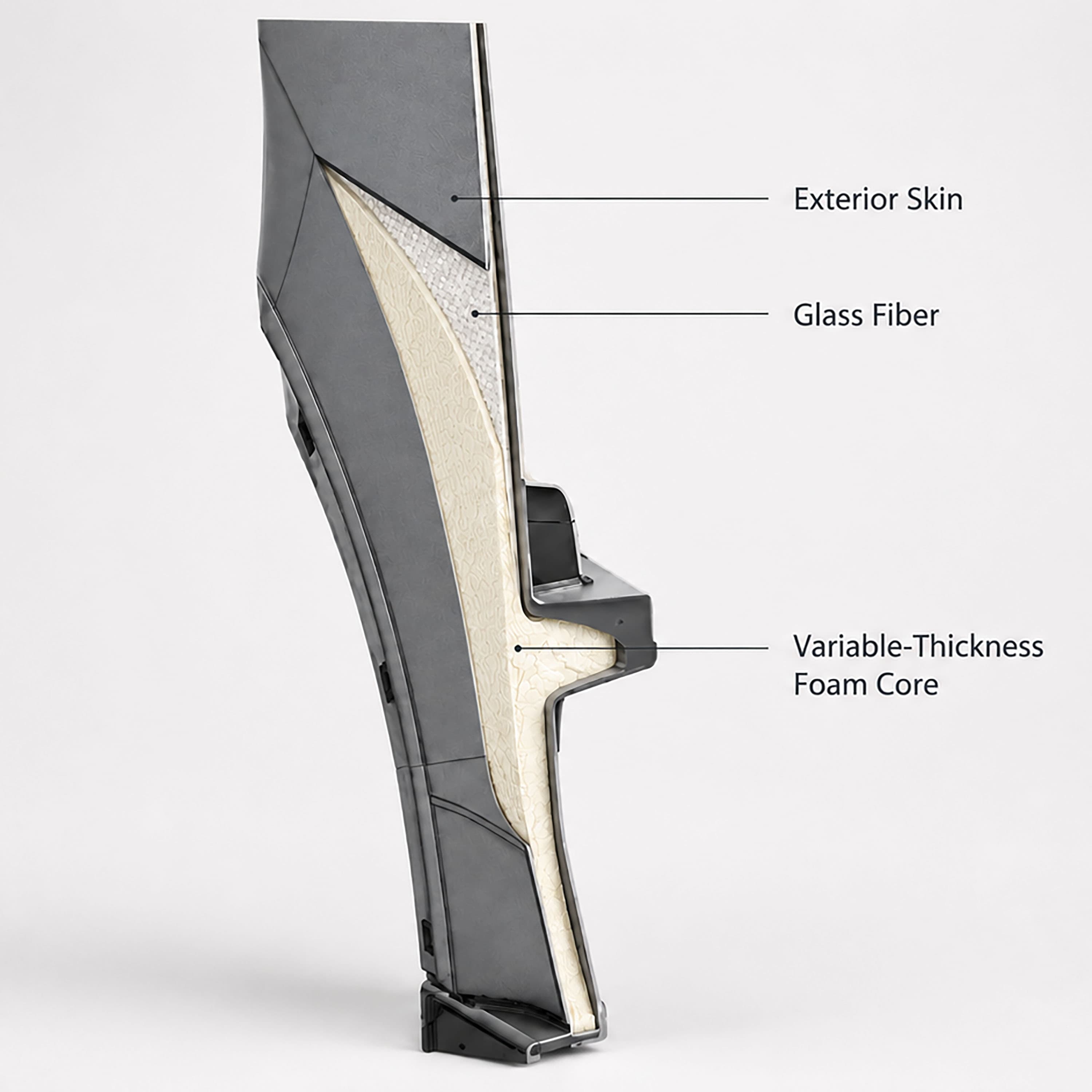
Engineered from advanced composite materials
SEVNA cab systems are manufactured using advanced composite materials rather than traditional stamped steel. This fundamental material choice delivers measurable advantages in weight, durability, corrosion resistance, and manufacturing flexibility — advantages that compound over the service life of a commercial fleet vehicle.
Composite cab panels are molded rather than stamped, enabling complex geometry and structural integration that would require multiple steel stampings and assembly steps in conventional cab manufacturing.
CFD-Informed Aerodynamic Development
SEVNA uses computational fluid dynamics studies to evaluate airflow behavior around the cab body, windshield area, mirrors, front corners, and side surfaces. These studies help identify areas of separation, turbulence, and drag sensitivity so the cab design can be refined before physical validation.
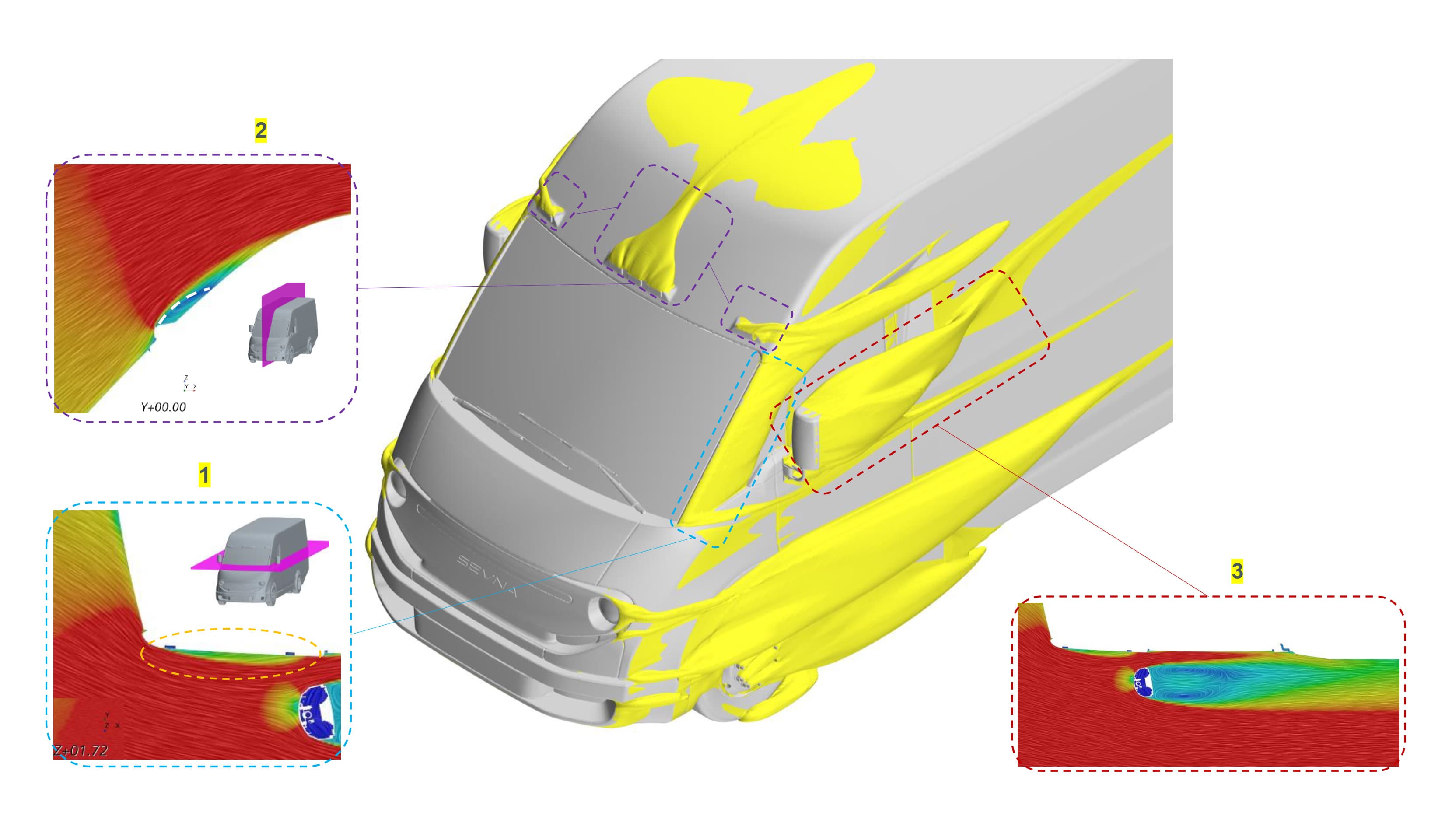
Flow Field Overview
Full-vehicle CFD visualization showing airflow structures and surface interaction around the cab body.
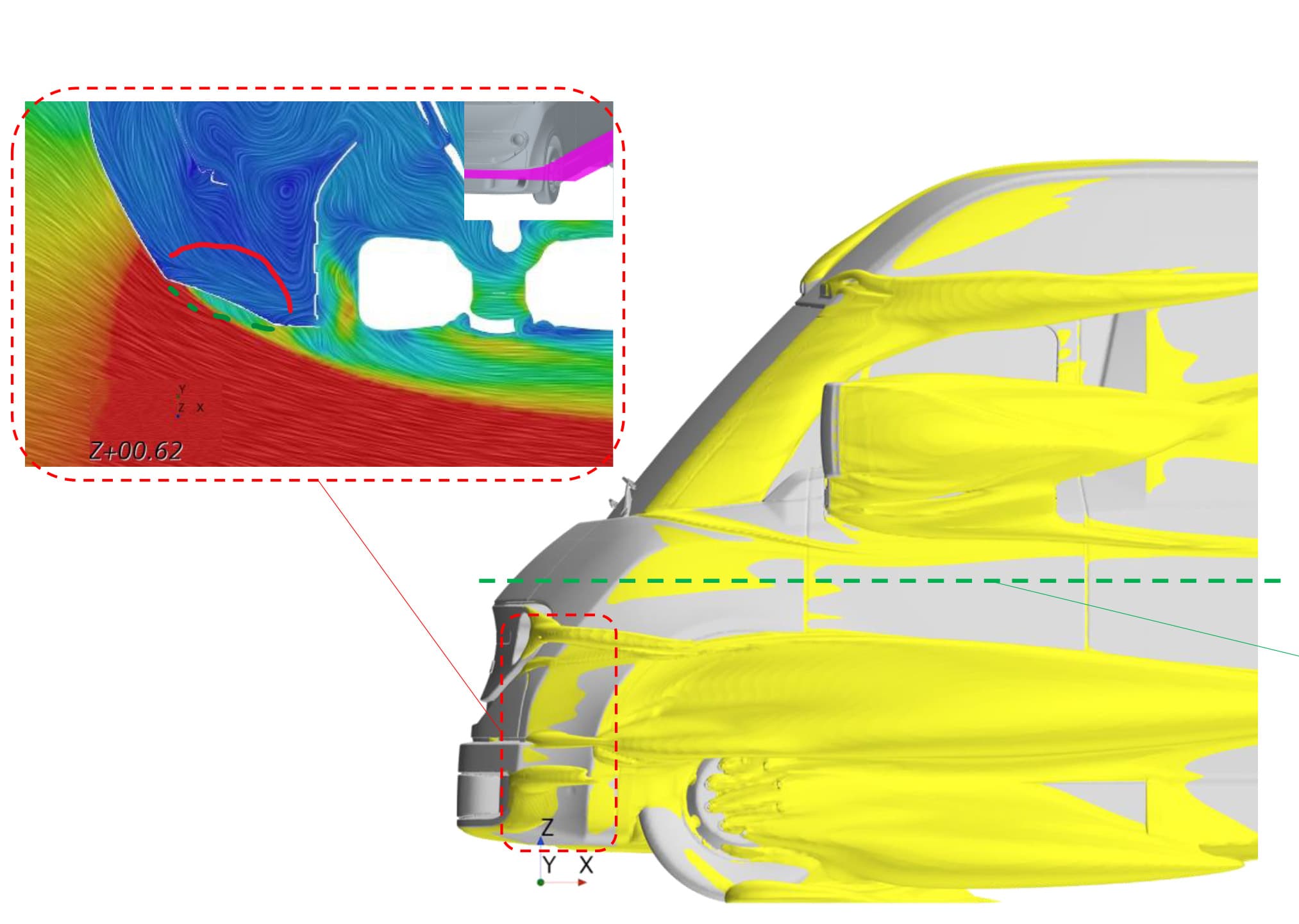
Detail Flow Analysis
Detailed CFD view highlighting localized airflow behavior around the windshield, front corner, and side surface regions.
Tight turning radius for urban operations
The SEVNA cab geometry — including a forward-set seating position and a clean front-corner profile — is designed to support a competitive turning radius for medium-duty platforms. Tighter maneuverability matters in urban delivery, dense fleet routes, and tight loading dock environments where every additional foot of swing adds operational friction.
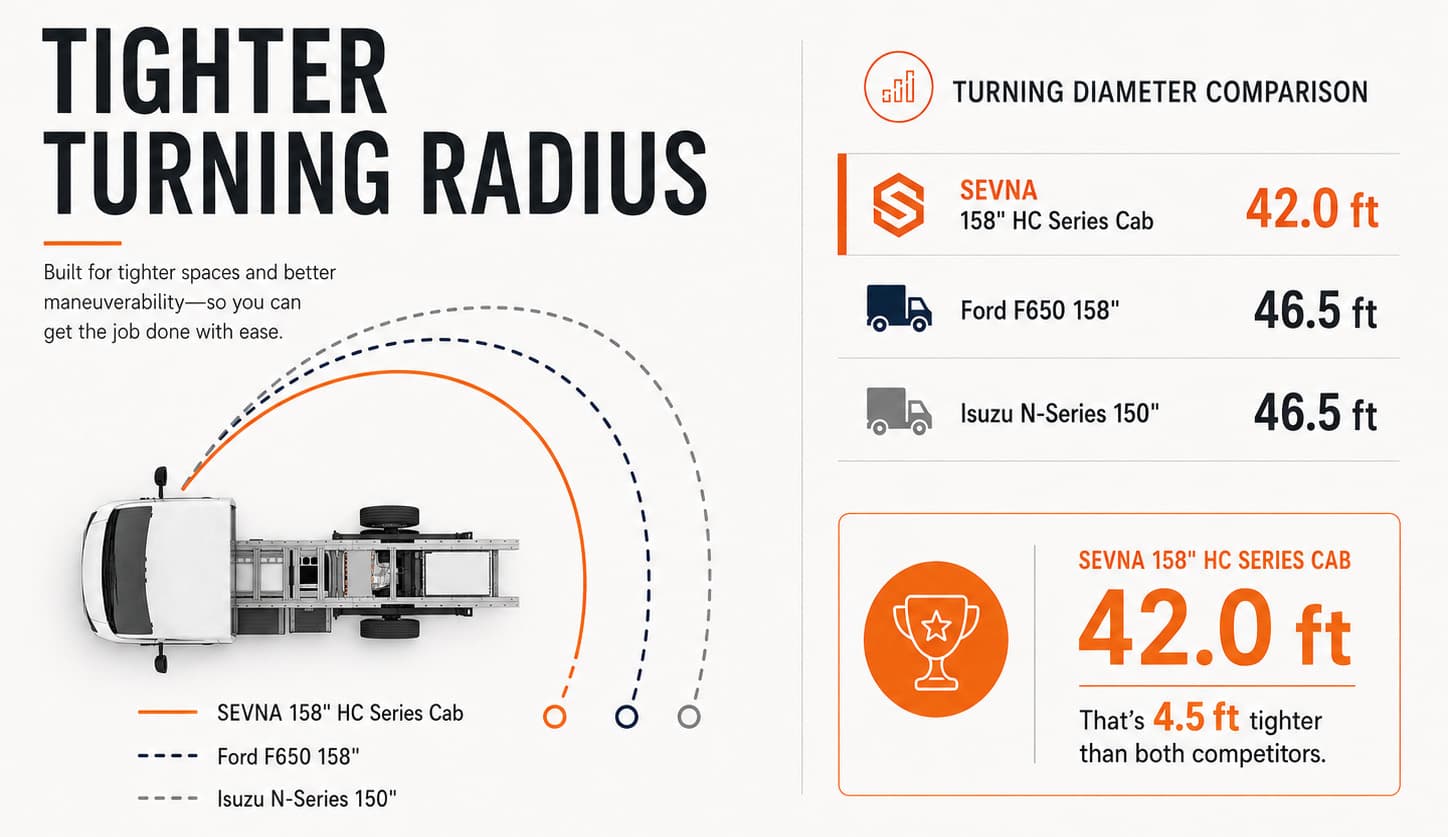
Turning Point Radius
Turning point radius study illustrating the cab swing path during low-speed maneuvering.
Composite vs. steel cab construction
A direct comparison of composite and steel for commercial cab applications.
| Property | Composite | Steel |
|---|---|---|
| Weight | Up to 40% lighter | Baseline |
| Corrosion | Does not rust | Susceptible to rust and oxidation |
| Durability | Maintains structural integrity over 100K+ miles | Degrades with corrosion and fatigue |
| Impact Resistance | Absorbs energy, resists denting | Dents and deforms permanently |
| Thermal | Natural insulation properties | Conducts heat and cold |
| NVH | Inherent damping reduces noise/vibration | Requires additional sound deadening |
| Manufacturing | Molded to complex geometry | Stamped in flat panels, multi-step assembly |
Built to outlast steel in commercial fleet service
In medium-duty commercial fleet applications, cab corrosion is a leading cause of vehicle retirement. Composite panels eliminate this failure mode entirely. SEVNA cabs will not rust, pit, or oxidize — regardless of climate, road salt exposure, or wash cycles.
Corrosion — composite does not rust, ever
Miles of structural durability in fleet conditions
Maintenance costs vs. steel cab fleet vehicles
Vehicle service life through cab longevity
Lighter cab. More payload. More range.
Every pound saved in cab construction is a pound returned to payload capacity or battery range. SEVNA's composite cab architecture can reduce cab weight by up to 40% compared to an equivalent steel cab — a material advantage that directly benefits EV operating economics.
For electric commercial vehicles, weight reduction is not optional — it is operational. Less curb weight means more usable payload capacity within GVWR limits and improved energy efficiency per mile.
Weight reduction vs. steel cab construction
- • Increased payload capacity within GVWR
- • Improved energy efficiency per mile
- • Extended battery range per charge
- • Reduced tire and brake wear